
Cancer Center MEP Engineering
Cancer treatment centers are among the most demanding healthcare environments to design. Patients undergoing chemotherapy are often severely immunocompromised, meaning even a minor lapse in air quality or temperature control can put their health at serious risk. At the same time, the equipment used in these facilities, from linear accelerators to MRI machines, generates enormous heat loads and requires uninterrupted power with zero tolerance for fluctuation.
For MEP engineers, the challenge is clear: design integrated mechanical, electrical, and plumbing systems that protect patients, support complex medical technology, and run reliably 24 hours a day, 7 days a week. In this post, we will break down the specialized engineering considerations that go into cancer center design across all three disciplines.
Specialized HVAC and Infection Control
In a cancer center, the HVAC system does far more than keep people comfortable. It serves as a frontline defense against airborne infection for patients whose immune systems have been weakened by treatment. Every element of the mechanical engineering design, from airflow patterns to filtration strategies, must be carefully planned to maintain strict environmental standards.
Infusion Suites
Infusion suites, where patients receive chemotherapy, require laminar airflow systems that move clean, filtered air in a single direction across the treatment area. This approach minimizes the chance of airborne contaminants reaching patients during the hours they spend connected to IV lines with suppressed immune defenses. Designing these systems requires close coordination between mechanical engineers, architects, and clinical staff to ensure the airflow patterns align with the room layout and patient positioning.
Managing High Heat Loads
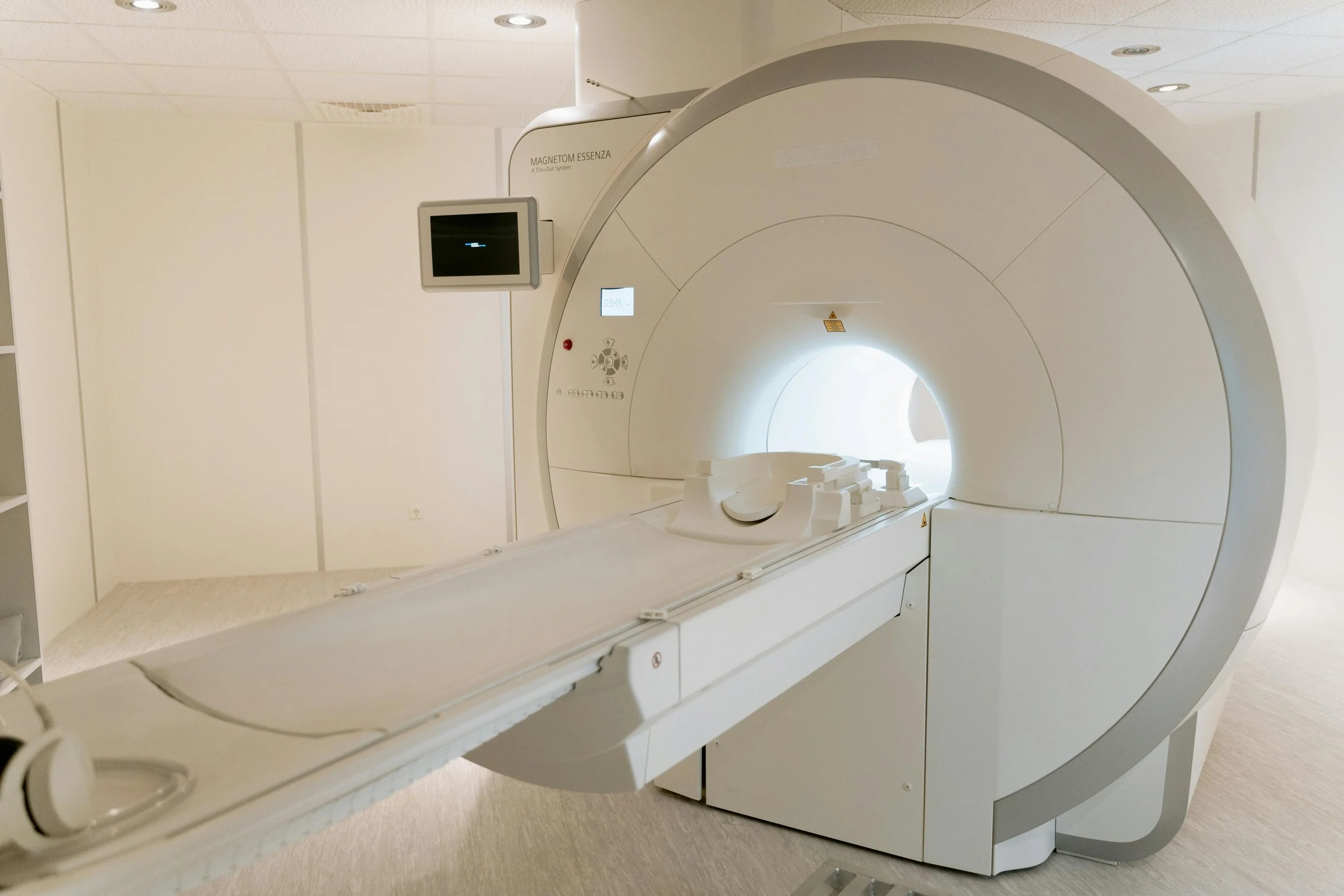
Cancer treatment equipment generates significant thermal output. Linear accelerators (LINACs) used for radiation therapy and MRI machines used for diagnostic imaging run continuously and produce substantial heat that standard HVAC systems simply cannot handle. Engineers must design dedicated cooling loops and supplemental air handling units sized specifically for these equipment rooms. The cooling systems also need redundancy built in, because if an MRI magnet overheats, the consequences go well beyond discomfort.
HEPA Filtration Strategies
High-Efficiency Particulate Air (HEPA) filtration is a cornerstone of infection control in cancer centers. In shared treatment areas and patient rooms, HEPA filters capture 99.97% of particles down to 0.3 microns, including bacteria, mold spores, and other airborne pathogens. The placement of these filters, combined with carefully calculated air changes per hour (ACH), creates a layered defense system. Engineers also design the HVAC layout to maintain positive and negative pressure relationships between clean and soiled spaces, preventing cross-contamination throughout the facility.
Redundancy That Keeps Patients Safe
Perhaps most importantly, the HVAC system in a cancer center needs built-in redundancy. If an air handling unit fails, there must be backup capacity to maintain the required ACH rates, filtration levels, and pressure relationships without interruption. This is not a "nice to have" feature. It is an absolute requirement for spaces where vulnerable patients depend on clean air for their safety. Redundant systems, automatic failover controls, and real-time monitoring all play a role in keeping these critical environments stable.
Electrical Resilience and Precision
A momentary power flicker in a typical office building is a minor annoyance. In a cancer center, that same flicker during an active radiation therapy session could disrupt a precisely calibrated dose and compromise patient treatment. Electrical engineering in these facilities demands a level of resilience and precision that goes well beyond standard commercial design.
The foundation of electrical design for cancer treatment spaces starts with N+1 redundancy for critical power systems. This means that for every essential power component, there is at least one backup ready to take over instantly. Emergency generators, uninterruptible power supplies (UPS), and automatic transfer switches work together to ensure that radiation therapy machines, imaging equipment, and life-safety systems never lose power, even for a fraction of a second.
Beyond redundancy, engineers must address electromagnetic interference (EMI) and radio frequency interference (RFI). Sensitive diagnostic imaging tools like MRI and PET/CT scanners can be affected by stray electromagnetic signals from nearby equipment or building systems. Proper shielding, grounding, and cable routing are essential to maintaining image quality and diagnostic accuracy. This requires close coordination between the electrical engineer, equipment vendors, and the construction team throughout the project.
Tunable Lighting for Patient Wellness
Lighting might not seem like a critical engineering consideration in a cancer center, but it has a meaningful impact on patient well-being. Patients in infusion bays often spend hours at a time receiving treatment. Research has shown that lighting tuned to support circadian rhythms, shifting from cooler blue-white tones during the day to warmer amber tones in the afternoon, can help reduce anxiety, improve sleep quality, and support the body's natural healing processes.
Designing circadian lighting systems requires careful coordination between the electrical engineer and the lighting designer. The controls must be intuitive for nursing staff to adjust and robust enough to operate consistently across multiple treatment bays. When done well, this kind of thoughtful design transforms a clinical space into a more calming, patient-centered environment.
Specialized Plumbing and Medical Gas Systems
The plumbing systems in a cancer center carry responsibilities that extend far beyond standard water supply and drainage. From medical gas distribution to hazardous waste handling, every pipe, valve, and fitting must be designed with the unique demands of oncology care in mind.
Here are four key plumbing and medical gas considerations that MEP engineers address in cancer center design:
1. Medical Gas Distribution
Oxygen and vacuum lines are essential in sedation areas, recovery rooms, and procedure suites throughout the facility. Engineers design distribution systems that deliver reliable, consistent pressure to every outlet while building in redundancy so that no single point of failure can disrupt gas supply to patient care areas.
2. Acid-Waste Piping
Cancer center pharmacies and laboratories handle hazardous chemotherapy agents that cannot be disposed of through standard drainage systems. Specialized acid-waste piping made from chemical-resistant materials like polypropylene or PVDF is required to safely transport these materials to appropriate collection points. Proper routing, venting, and containment are all critical to protecting staff and the environment.
3. Water Quality and Legionella Mitigation
Immunocompromised patients are at significantly higher risk of Legionella infection from contaminated water systems. Engineers address this through point-of-use filtration at critical fixtures, thermal mixing valves that maintain safe water temperatures, and water management programs designed to prevent bacterial growth in low-flow or stagnant areas of the piping system.
4. Backflow Prevention and Isolation
In facilities where hazardous chemicals and medical gases are present, backflow prevention devices and isolation valves are essential to protect the potable water supply. Engineers specify and locate these devices to meet code requirements while also considering the practical needs of maintenance staff who must test and service them regularly.
These plumbing and medical gas systems work quietly behind the walls, but they are absolutely essential to safe, effective cancer treatment operations.
The Healing Environment: The Human Element
Great MEP engineering in a cancer center goes beyond technical performance. It contributes to creating a space where patients feel cared for, staff can work effectively, and the building supports healing in every possible way. This is where engineering meets empathy.
Acoustic attenuation is a prime example. Mechanical systems in healthcare facilities can generate significant noise from fans, pumps, compressors, and air movement through ductwork. In a cancer center, where patients may be resting, receiving difficult news, or simply trying to find a moment of calm, that constant background noise can add to an already stressful experience. Engineers specify low-noise equipment, vibration isolation mounts, acoustically lined ductwork, and sound-attenuating devices to create spaces that feel peaceful rather than institutional.
Flexibility for future technology is another hallmark of thoughtful cancer center design. Medical technology evolves rapidly, and the treatment equipment installed today may be replaced by something entirely different within a decade. Engineers design MEP backbones with extra capacity, accessible routing paths, and modular connections so that future equipment upgrades do not require tearing open walls and ceilings throughout the building. This kind of forward thinking saves facility owners significant renovation costs down the road.
Finally, energy efficiency is a constant balancing act in facilities that operate around the clock. Cancer centers consume enormous amounts of energy to power medical equipment, maintain strict environmental conditions, and keep the lights on 24/7. Engineers work to offset these demands through energy recovery systems, variable speed drives on pumps and fans, high-efficiency equipment selections, and smart controls that adjust system output based on real-time occupancy and load conditions. The result is a facility that meets its demanding operational requirements while keeping long-term utility costs under control.
Conclusion
Designing MEP systems for a cancer center requires a unique combination of technical precision, creative problem-solving, and genuine care for the people who will use the space. From HEPA filtration that protects immunocompromised patients to redundant power systems that keep radiation therapy running without interruption, every engineering decision plays a role in patient safety and treatment quality.
At 5BY5 Engineers, our team brings deep experience in healthcare facility design to every project. We have been involved in oncology- focused projects for both Saint Luke’s hospitals throughout the Kansas City region and LMH Health in Lawrence, and we understand what it takes to create environments where patients can focus on healing while the building systems work flawlessly behind the scenes. If you are planning a cancer center project, reach out to our team to discuss how we can help.
At 5BY5, we have years of experience working with partners in design and construction. We’re excited to put our innovative expertise to work to make any project we take on a success. Have a project you’d like to discuss? Work with us.
