Emergency Generator Systems in Kansas City, MO
Engineered Backup Power That Keeps Critical Operations Running When the Grid Goes Down
When the power goes out, the clock starts.
For hospitals, the margin between a brief disruption and a life-threatening crisis is measured in seconds. For data centers, manufacturing plants, and commercial facilities across Kansas City, an unplanned outage can mean hundreds of thousands of dollars in lost revenue, spoiled inventory, or compromised safety systems. The question is never if the grid will fail; it is when, and whether your facility will be ready.
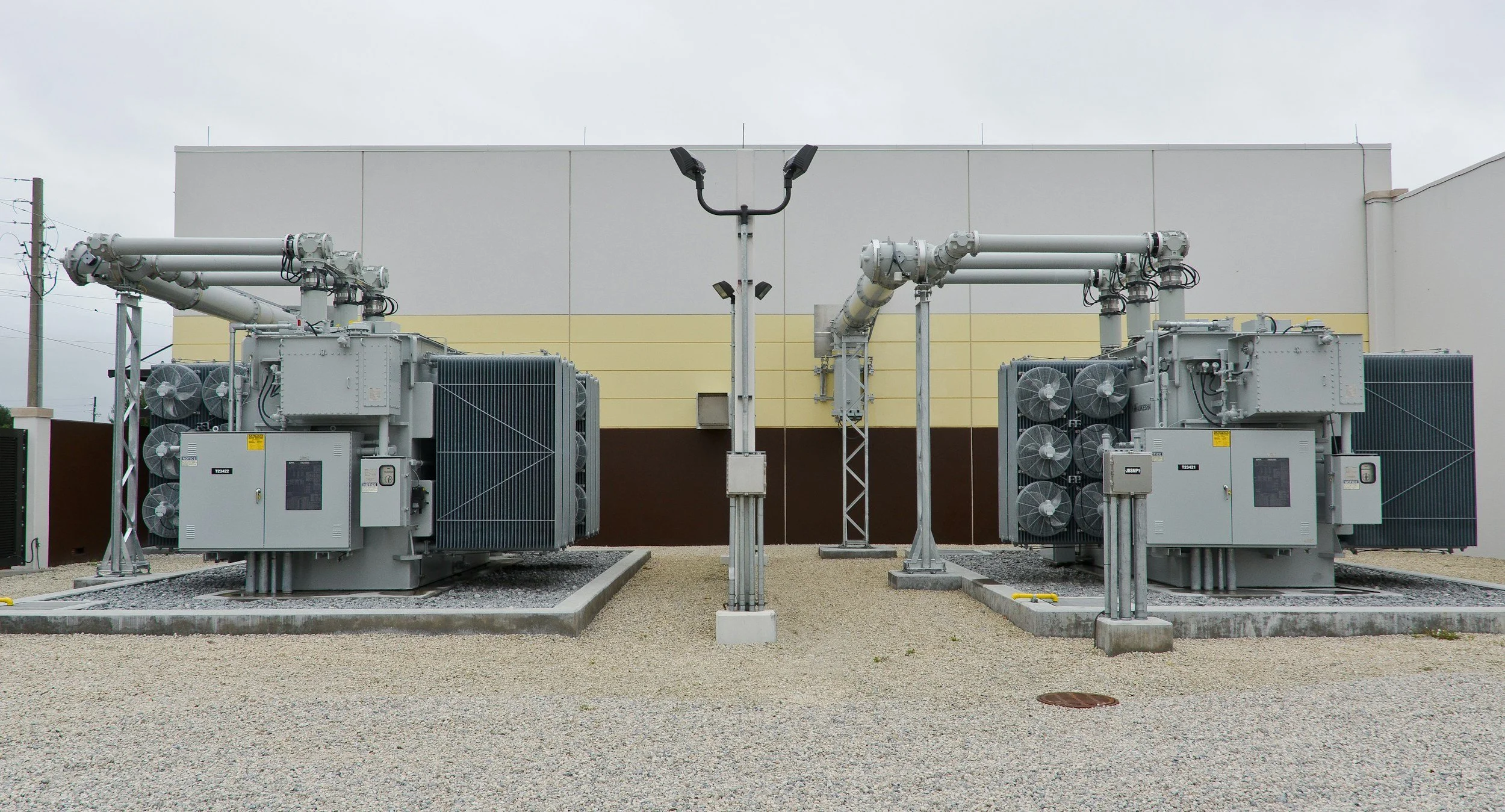
5BY5 Engineering designs emergency generator systems that go far beyond simply keeping the lights on. Our team brings deep experience in healthcare facility engineering and critical power infrastructure to every project, which means we understand the cascading consequences of
inadequate backup power. We perform rigorous load analysis, size generators precisely to your operational demands, coordinate automatic transfer switches for seamless failover, and design fuel systems that sustain extended outages, all while meeting the strictest code requirements for life safety and emergency power.
Kansas City's weather patterns, from severe summer storms and ice events to tornadoes that can take down utility infrastructure for days, make reliable backup power not a luxury but a necessity. 5BY5 Engineering's local presence and understanding of regional utility coordination requirements mean your emergency power system is designed for the specific challenges you face, backed by a firm that has saved clients over $1 million in unnecessary construction costs while delivering systems that are efficient, reliable, and simple to operate.
✔ Saved clients over $1 million in unnecessary construction costs
✔ Helped clients simplify operations, saving over $300,000 yearly in maintenance fees
✔ Helped over 100 owners make buildings more efficient with well-designed MEP systems
✔ Proven experience with Kansas City brewery projects, including City Barrel Brewery and Limitless Brewing
✔ Founded in 2016 by Brock Centlivre, PE, Principal in Charge
Our Services
Emergency generator system design is the discipline of engineering a facility's secondary power source so that critical loads receive uninterrupted electricity the moment utility power is lost.
At 5BY5 Engineering, this service encompasses the full scope of backup power infrastructure: generator selection and sizing, fuel system design and storage, automatic transfer switch coordination, distribution architecture, noise and emissions mitigation, and integration with building automation and life safety systems.
Our process begins with a comprehensive load analysis. We catalog every electrical load in your facility, classify each as emergency, legally required standby, or optional standby per NEC Article 700, 701, and 702 requirements, and calculate both running and inrush demands. This data drives precise generator sizing, avoiding the costly mistake of oversizing, which wastes capital and fuel, or undersizing, which puts operations at risk. For healthcare facilities, we align our designs with NFPA 110 and NFPA 99 requirements, ensuring life safety systems, critical care equipment, and essential building services transfer within the mandated 10-second window.
From there, we design the fuel delivery and storage systems, whether diesel, natural gas, or bi-fuel, accounting for runtime requirements, local fire code setbacks, environmental containment, and refueling logistics specific to your Kansas City site conditions. Automatic transfer switch coordination is engineered to manage load sequencing, prevent utility backfeed, and enable clean transitions that protect sensitive equipment. Every design includes provisions for routine testing, maintenance access, and parallel operation with the utility where required.
The result is an emergency power system that meets code, supports your operations under the worst conditions, and remains straightforward for your facility staff to operate, test, and maintain, aligned with 5BY5 Engineering's core commitment to simplicity, reliability, and efficiency.
Protect Your Operations With Engineered Backup Power
how you benefit
-
Generator sizing is where emergency power projects succeed or fail, and where the most money is either saved or wasted. An oversized generator doesn't just cost more to purchase and install; it runs inefficiently at low loads, accelerates wet-stacking in diesel units, increases maintenance frequency, and consumes fuel disproportionate to its output. An undersized generator is far worse: it cannot support critical loads, trips on overload during the moments your facility needs it most, and can create dangerous voltage and frequency instability that damages sensitive medical or computing equipment.
5BY5 Engineering's approach to generator sizing starts with granular load analysis, not rough estimates. We document every connected load, evaluate diversity factors and demand profiles, account for motor starting inrush currents, and project future expansion needs. For healthcare clients in the Kansas City area, this means we account for imaging equipment power spikes, surgical suite demands, and HVAC loads critical to infection control and patient comfort, loads that generic sizing spreadsheets routinely miss.
This precision has real financial impact. 5BY5 has saved clients over $1 million in unnecessary construction costs across our project portfolio, and generator right-sizing is one of the most consistent sources of those savings. When your generator matches your actual load profile, you spend less on equipment, less on fuel, less on maintenance, and less on the structural and electrical infrastructure required to support it. You also gain confidence that when the transfer switch engages, your generator will carry every critical load without hesitation. That confidence is not a luxury in a hospital or critical operations facility, it is a fundamental requirement.
-
The automatic transfer switch is the single most critical component between your generator and the loads it serves. When utility power drops, the ATS must detect the outage, signal the generator to start, verify stable generator output, and transfer loads, all within seconds. For emergency systems under NEC Article 700, the entire sequence must complete within 10 seconds. For hospitals governed by NFPA 99, failure to meet this window is not merely a code violation; it is a direct threat to patient safety.
5BY5 Engineering designs ATS coordination schemes that go well beyond selecting a switch and connecting it. We engineer the detection logic, time delays, and voltage/frequency sensing parameters to ensure reliable transfer under real-world conditions, including utility brownouts, phase loss events, and momentary interruptions that can confuse poorly configured switches. For facilities with multiple generators or multiple transfer switches, we design load sequencing strategies that prioritize life safety and critical loads, stagger non-essential loads to prevent generator overload during startup, and coordinate retransfer back to utility power when the grid stabilizes.
In Kansas City, where summer storm activity can produce repeated utility interruptions in a single event, transfer switch coordination must handle multiple transfer and retransfer cycles without nuisance lockouts or equipment damage. Our designs are tested and commissioned to prove performance under these exact conditions. We also integrate ATS status and alarm reporting into building automation systems, giving facility operators real-time visibility into transfer switch position, generator status, and load conditions, turning a stressful outage event into a managed, predictable response.
-
A generator without adequate fuel is a piece of idle steel. Fuel system design is one of the most overlooked aspects of emergency power engineering, yet it determines how long your facility can sustain operations during an extended outage, and whether your system complies with fire, environmental, and building codes that govern fuel storage in your jurisdiction.
5BY5 Engineering designs fuel systems, diesel, natural gas, and bi-fuel configurations, tailored to each facility's runtime requirements, site constraints, and risk profile. For healthcare facilities, NFPA 110 requires fuel storage sufficient for the facility's defined mission duration, which can range from 24 to 96 hours depending on classification. We calculate fuel consumption rates based on actual generator loading, not nameplate ratings, to ensure storage volumes are accurate rather than inflated. We then design tank installations, containment systems, fill connections, fuel transfer piping, and day tank arrangements that meet Kansas City Fire Department setback requirements, EPA secondary containment regulations, and local permitting conditions.
For facilities in the Kansas City metro area, site logistics matter. We evaluate delivery truck access routes, fill point locations, and emergency refueling procedures to ensure that fuel can be replenished during a sustained regional outage when roads may be compromised. For natural gas installations, we coordinate with the local utility on gas pressure requirements and service sizing to ensure the generator receives adequate fuel flow under peak demand. The result is a fuel system that supports your generator's full rated output for the duration your operations require, with the documentation and compliance verification to satisfy every authority having jurisdiction.
-
Emergency power systems are among the most heavily regulated building systems in any facility. NEC Articles 700, 701, and 702 establish the baseline requirements for emergency, legally required standby, and optional standby systems. NFPA 110 governs the performance and testing of emergency and standby power systems. NFPA 99 adds healthcare-specific mandates for essential electrical system design. Kansas City's local amendments and the authority having jurisdiction impose additional requirements on installation, permitting, and inspection.
5BY5 Engineering navigates this regulatory landscape as a core competency, not an afterthought. Every emergency generator system we design begins with a code analysis that identifies all applicable requirements, including separation of emergency circuits from normal wiring, fire-rated wiring methods, generator room ventilation and fire suppression, and seismic restraint where required. We document compliance at every stage of design, providing the code references and calculations that plan reviewers and inspectors require to approve your project without delays or costly redesigns.
Our healthcare facility experience is particularly relevant here. Hospitals and ambulatory care facilities in Missouri must comply with CMS Conditions of Participation, which reference NFPA 99 and NFPA 110 as enforceable standards. A code deficiency in your emergency power system can trigger survey findings that jeopardize accreditation and Medicare reimbursement. 5BY5 designs systems that satisfy every layer of regulatory oversight, from the local electrical inspector to The Joint Commission surveyor, so you can focus on your mission rather than your compliance risk.
-
Emergency generators produce significant noise and vibration, diesel units typically operate at 85–100 dBA at one meter without attenuation. For healthcare facilities where patient recovery depends on controlled environments, for commercial properties adjacent to residential neighborhoods, and for campuses with multiple buildings in close proximity, unmitigated generator noise is both a code compliance issue and a community relations problem.
5BY5 Engineering addresses noise and vibration control as an integral part of generator system design, not a remedial add-on. We evaluate the acoustic environment of each site, identify sensitive receptor locations, patient rooms, adjacent residences, outdoor gathering areas, and specify the combination of enclosure sound attenuation, exhaust silencers, intake and discharge louver treatments, and vibration isolation required to meet both the Kansas City noise ordinance and the facility's operational standards.
For indoor generator installations, we design engine room acoustics including wall and ceiling absorption treatments, sound-rated doors, and ventilation air paths that provide adequate combustion and cooling airflow without creating noise flanking paths. For outdoor installations, we specify factory-built or field-assembled sound attenuated enclosures rated to achieve the target sound level at the property line. Vibration isolation systems, including inertia bases, spring isolators, and flexible connectors for exhaust and fuel piping, prevent structural transmission that can be perceived as low-frequency rumble in occupied spaces well removed from the generator itself. The result is a system that performs its critical function without creating secondary problems for patients, tenants, or neighbors.
-
A generator that runs but cannot be monitored, tested, or controlled from the facility's central operations point is a generator that will eventually fail when you need it most. Modern emergency power systems must integrate with building automation systems (BAS) to provide real-time status, alarm annunciation, trend logging, and remote exercising capabilities that keep facility operators informed and in control.
5BY5 Engineering designs generator-to-BAS integration as a standard component of every emergency power project. We specify generator controller communication protocols, Modbus, BACnet, or SNMP depending on your BAS platform, and map the critical data points: run status, voltage and frequency, oil pressure and temperature, coolant temperature, fuel level, battery voltage, and alarm conditions. Transfer switch status, load current, and transfer event logs are integrated alongside the generator data to provide a complete emergency power system dashboard.
This integration supports the proactive maintenance strategies that keep emergency power systems reliable over their 20- to 30-year service life. Trend data reveals gradual performance degradation, increasing coolant temperatures, declining battery voltage, rising fuel consumption, before these conditions cause a failure during an actual outage. For healthcare facilities managing multiple generators and transfer switches across a campus, BAS integration transforms emergency power management from a manual, walk-around inspection process into a centralized, data-driven operation. 5BY5's commitment to simplicity of operation means we design these integrations to present the right information to the right people at the right time, without overwhelming operators with unnecessary data.
OUR SERVICE Categories
Healthcare Facilities
Hospitals, surgical centers, and ambulatory care facilities have the most stringent emergency power requirements of any building type. 5BY5 Engineering designs generator systems that comply with NFPA 99 essential electrical system classifications, ensure 10-second transfer for life safety and critical branch loads, and support extended outage operations for facilities classified as Type 1 Essential Electrical Systems.
Commercial and Retail Properties
Power outages cost commercial and retail facilities revenue with every minute of downtime. 5BY5 designs backup power systems that protect refrigeration, point-of-sale systems, security infrastructure, and HVAC to keep businesses operational, and inventory protected during Kansas City's storm-prone seasons.
Data Centers and Critical Operations
Facilities with zero tolerance for downtime require generator systems with redundant configurations, maintenance bypass capability, and sub-second UPS coordination. 5BY5 designs Tier-appropriate emergency power architectures that match availability targets to operational and financial risk profiles.
Government and Municipal Facilities
Government buildings, emergency operations centers, and public safety facilities require backup power systems that meet federal and state continuity-of-operations requirements. 5BY5 brings experience with government project delivery, including compliance documentation and commissioning standards specific to public-sector construction.
Hospitality
Hotels and event venues must protect guest safety systems, fire alarms, emergency lighting, elevators, while maintaining comfort systems that prevent revenue loss during extended outages. 5BY5 designs emergency power solutions scaled to hospitality operational priorities and seasonal demand patterns in the Kansas City market.
OUR process
STEP ONE
Discovery and Load Analysis
Every emergency generator project begins with 5BY5's commitment to learn. We conduct a thorough site assessment and electrical load inventory, classifying every load per NEC emergency, legally required standby, and optional standby categories. We meet with facility operators, maintenance staff, and ownership to understand operational priorities, existing infrastructure constraints, and future expansion plans. For healthcare facilities, we review clinical workflow requirements and coordinate with biomedical engineering teams. This phase typically takes two to three weeks depending on facility complexity. The deliverable is a detailed load analysis report that forms the technical foundation for every subsequent design decision.
STEP TWO
System Design and Engineering
With load data confirmed, our engineers design the complete generator system: generator sizing and selection, fuel system configuration, ATS coordination, distribution architecture, noise and vibration controls, and BAS integration. We produce construction documents, plans, specifications, and calculations, that meet the requirements of the Kansas City plan review authority and all applicable codes. Throughout design, we collaborate with the project architect, structural engineer, and construction manager to resolve spatial, structural, and scheduling conflicts before they become field problems. Design typically spans four to eight weeks depending on project scope.
STEP THREE
Code Review and Permitting Coordination
Before documents go to bid, 5BY5 conducts an internal code compliance review against NEC, NFPA 110, NFPA 99 (for healthcare), and local Kansas City amendments. We prepare the code analysis documentation that accompanies permit submittals and proactively address the questions plan reviewers typically raise about emergency power systems, separation requirements, wiring methods, ventilation calculations, and fuel storage compliance. Our goal is a clean permit approval without revision cycles that delay your project schedule.
STEP FOUR
Construction Administration and Quality Assurance
During construction, 5BY5 provides construction administration services including submittal review, RFI responses, and site observation visits to verify the installed system matches the design intent. We review generator, ATS, and switchgear submittals for compliance with specifications, and we coordinate with the installing electrical contractor to resolve field conditions. This ongoing involvement ensures quality is maintained from design through installation.
STEP FIVE
Commissioning and Testing
Before the system goes live, 5BY5 performs, or oversees, a comprehensive commissioning process that verifies every component operates as designed. This includes generator load bank testing, ATS transfer and retransfer testing under simulated and actual utility loss conditions, fuel system functional verification, BAS integration point validation, and full-facility integrated system testing. We document results in a commissioning report that satisfies owner requirements, accreditation bodies, and authorities having jurisdiction. Your team receives training on system operation and maintenance, ensuring the people who manage the system day-to-day understand exactly how it works and what to monitor. This is where 5BY5 performs, delivering a system that is efficient, reliable, and simple to operate.
Our APPROACH
5BY5 Engineering was founded on the belief that building systems should be simple, reliable, and efficient, and nowhere is that philosophy more critical than in emergency power design.
When a generator must start and assume load in ten seconds or a patient's life is at risk, there is no room for unnecessary complexity, ambiguous control sequences, or systems that require specialized expertise to operate. Our approach to emergency generator design is rooted in the conviction that the best systems are the ones your facility staff can operate, test, and troubleshoot with confidence, because reliability is not just about hardware, it is about the people who manage it.
We begin every project by learning. Not just the electrical data, but the operational context: how your facility runs, who operates it, what your maintenance capabilities are, and what keeps you up at night about your existing power infrastructure. This understanding shapes designs that fit your organization, not designs that force your organization to adapt to an engineered ideal. We collaborate with every stakeholder on the project team because emergency power touches every discipline: architecture provides the space, structural supports the weight, mechanical supplies the ventilation and cooling, and plumbing manages fuel piping and containment. A generator system designed in isolation from these disciplines creates conflicts that surface as change orders during construction.
Our Kansas City roots mean we understand the regional conditions that shape emergency power requirements: the severe weather exposure, the utility infrastructure characteristics, the local code enforcement practices, and the contractor community that builds these systems. We have worked with healthcare facilities, commercial properties, and government clients throughout the Kansas City metropolitan area, and we bring that accumulated experience to every new project. When we deliver a completed emergency power system, we measure our performance by three criteria: system efficiency, reliability, and simplicity of operation. If your generator system meets all three, we have done our job.
FREQUENTLY ASKED QUESTIONS
5BY5 Engineering, founded by Brock Centlivre in 2016 and headquartered in Kansas City, Missouri, specializes in mechanical, electrical, and plumbing engineering that simplifies building operations and improves facility efficiency. With proven experience across more than 100 building projects, including Kansas City breweries City Barrel and Limitless Brewing, 5BY5 brings practical, reliability-focused MEP design to production facilities throughout the Kansas City metro area.
-
Generator sizing requires a detailed load analysis that goes beyond simply adding up nameplate ratings. 5BY5 Engineering catalogs every connected load, evaluates diversity and demand factors, accounts for motor starting inrush currents, and projects future growth. The result is a generator precisely matched to your actual operating profile, avoiding the cost penalties of oversizing and the operational risk of undersizing. Contact us to schedule a load analysis for your facility.
-
NFPA 110 requires monthly no-load or loaded testing and annual load bank testing for Level 1 emergency power systems, which includes most healthcare and life safety applications. Testing verifies the generator starts, achieves rated voltage and frequency, and accepts transferred load within the required time. 5BY5 designs systems with provisions for safe, efficient testing and can develop a testing and maintenance program tailored to your facility's classification and operational schedule.
-
Diesel remains the most common fuel for emergency generators due to its energy density, on-site storage capability, and code-established performance track record. Natural gas eliminates fuel storage concerns and provides unlimited runtime as long as utility gas service is maintained. Bi-fuel systems combine the benefits of both. 5BY5 evaluates your runtime requirements, site constraints, and risk tolerance to recommend the fuel strategy that best serves your facility.
-
Healthcare emergency power systems must comply with NEC Articles 700 and 517, NFPA 99, NFPA 110, and CMS Conditions of Participation. 5BY5 conducts a code analysis at the start of every healthcare project, documents compliance throughout the design process, and provides the calculations and narratives that plan reviewers and accreditation surveyors require. Our healthcare facility engineering experience means we design for the full regulatory framework, not just the electrical code.
-
Production facilities with high cooling, heating, and ventilation loads offer significant energy savings opportunities. 5BY5 evaluates heat recovery from refrigeration systems, variable-speed drives on pumps and fans, energy recovery ventilation for high-exhaust applications, and right-sized equipment that avoids the inefficiency of oversized systems operating at partial load. While savings vary by facility, our portfolio-wide track record includes over $300,000 in annual maintenance and operating cost savings delivered to clients.
Reliable Backup Power Starts Here
Ensure your Kansas City facility is protected. Talk to 5BY5 Engineering about emergency generator design.