
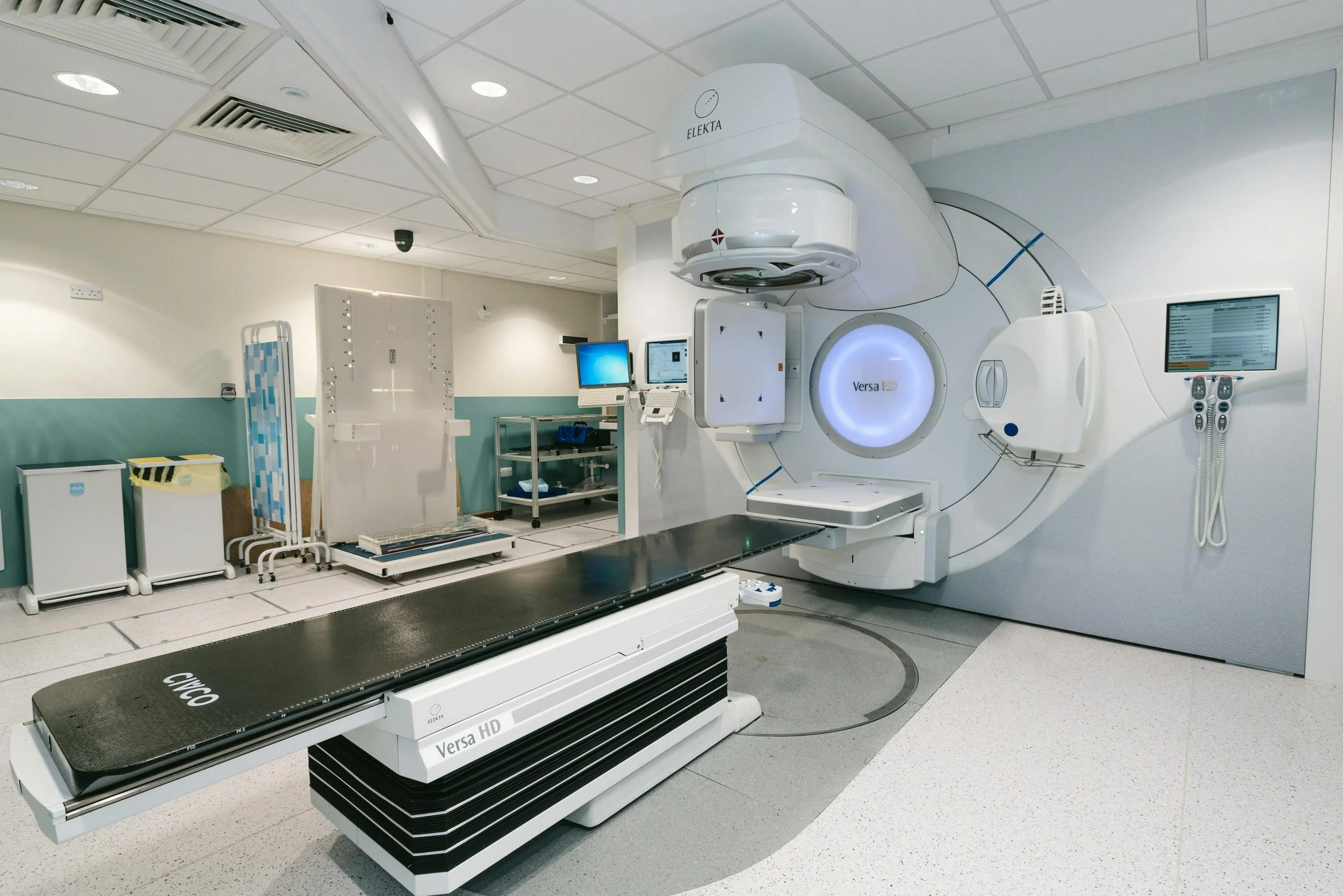
Critical System Design for Hospitals in Kansas City
Reliable Backup Power, Redundant HVAC, and Life Safety Engineering for Patient Protection
When the power goes out in an office building, people are inconvenienced. When the power goes out in a hospital, lives are at stake.
Operating rooms go dark. Ventilators stop. Medication refrigeration fails. Infection control barriers collapse. For healthcare administrators, hospital engineers, and facility planners, the question is never if a critical system will be tested, it is when. And the answer to that question has to be the same every time: the system performs exactly as designed, without hesitation, without failure. The stakes demand nothing less.
5BY5 Engineering designs critical MEP systems that eliminate ambiguity from emergency response. Our approach to hospital backup power, redundant HVAC, and life safety integration is built on a foundational principle: simplicity reduces failure points. Rather than layering complexity on top of complexity, we engineer streamlined systems that facility teams can operate, test, and maintain with confidence, systems that comply with NFPA 99, ASHRAE 170, and the full spectrum of healthcare regulatory codes while remaining practical for the people who run them every day. We have saved clients over $1 million in unnecessary construction costs by focusing on what actually works, not what merely looks impressive on paper.
For healthcare facilities across Kansas City and the surrounding region, this means partnering with engineers who have hands-on experience inside major health systems, including critical projects at Children's Mercy Hospital. We understand the local regulatory environment, the regional climate demands on HVAC redundancy, and the operational realities of keeping patients safe in a market where healthcare infrastructure is expanding rapidly. Our designs do not just meet code. They give you peace of mind.
✔ Saved clients over $1 million in unnecessary construction costs
✔ Helped clients simplify operations, saving over $300,000 yearly in maintenance fees
✔ Helped over 100 owners make buildings more efficient with well-designed MEP systems
✔ Proven experience with Kansas City brewery projects, including City Barrel Brewery and Limitless Brewing
✔ Founded in 2016 by Brock Centlivre, PE, Principal in Charge
Our Services
Critical system design for hospitals encompasses the engineering of every mechanical, electrical, and plumbing system that must remain operational during emergencies, power failures, natural disasters, and equipment malfunctions.
At 5BY5 Engineering, this discipline covers backup power generation and distribution, emergency lighting and fire alarm integration, redundant HVAC for infection control and temperature-sensitive environments, and the coordination of all these systems into a unified, testable framework that meets healthcare facility requirements under NFPA 99, NFPA 110, NFPA 72, and Joint Commission standards.
Our process begins with a thorough assessment of the facility's critical load profile. We identify every system and piece of equipment that must remain powered during an outage, from OR suites and ICUs to pharmacies, blood banks, and imaging departments, and we map the electrical distribution path from utility service through automatic transfer switches to the emergency and life safety branches. Generator sizing is not a guessing exercise; it is a calculated analysis that accounts for inrush currents, future load growth, and the specific power quality requirements of sensitive medical equipment such as MRI machines, ventilators, and infusion pumps. Transfer switch coordination is engineered to minimize transition time and prevent voltage sags that can disrupt digital equipment or reset critical monitoring systems.
On the mechanical side, we design redundant HVAC systems that maintain pressure relationships, temperature setpoints, and air change rates in critical spaces even when primary equipment fails. This is especially vital in surgical suites, isolation rooms, and sterile compounding pharmacies, where a loss of proper airflow can compromise patient safety and infection control protocols. Our designs incorporate lead-lag configurations, automatic failover sequences, and monitoring systems that alert facility staff the moment a deviation occurs.
Every system we design is engineered to be commissioned and rigorously tested before it is placed into service, ensuring a seamless transition from construction to operation and that the facility team has full confidence in the system's reliability from day one.
Protect Patients With Reliable Critical Systems
how you benefit
-
A hospital's emergency power system is the last line of defense between normal operations and a life-threatening facility failure. 5BY5 Engineering designs backup power systems that go far beyond simply installing a generator and hoping for the best. We perform detailed load analyses that account for every critical and life safety branch load in accordance with NFPA 99 and NFPA 110, ensuring that generator capacity is precisely matched to actual demand, including the inrush currents that occur when multiple systems restart simultaneously after a power loss.
Our electrical engineers design automatic transfer switch (ATS) coordination strategies that minimize the duration of power interruption to critical loads. For the most sensitive environments, operating rooms in active use, neonatal ICUs, cardiac catheterization labs, we specify systems that achieve transfer times measured in fractions of a second, often incorporating uninterruptible power supply (UPS) systems as a bridge between utility loss and generator pickup. Power quality is a central design criterion, not an afterthought. Sensitive imaging equipment, laboratory analyzers, and electronic health record systems all require clean, stable power, and our designs include harmonic filtering, voltage regulation, and grounding strategies that protect these investments.
In Kansas City, where severe weather events, including ice storms, tornadoes, and extreme heat, can challenge utility reliability, robust backup power is not optional; it is essential infrastructure. Our experience with major regional healthcare systems has taught us what works under real emergency conditions, and we bring that practical knowledge to every generator sizing calculation, fuel system design, and distribution layout we produce. The result is a backup power system your facility team can trust when the lights go out and every second matters.
-
Heating, ventilation, and air conditioning systems in hospitals are not comfort amenities, they are clinical infrastructure. Proper pressure relationships between spaces prevent airborne pathogens from migrating into sterile environments. Mandated air change rates in operating rooms and isolation rooms dilute and remove contaminants. Temperature and humidity control in pharmacies and laboratories preserves the integrity of medications and specimens. When an HVAC system fails in a hospital, the consequences extend far beyond discomfort; they threaten patient safety and regulatory compliance.
5BY5 Engineering designs HVAC redundancy strategies tailored to the specific risk profile of each critical area within a healthcare facility. For surgical suites, we engineer systems with redundant air handling units, automatic failover controls, and continuous monitoring of pressure differentials so that a single equipment failure never compromises the sterile field. In protective environment (PE) and airborne infection isolation (AII) rooms, our designs maintain the directional airflow required by ASHRAE 170 and FGI Guidelines even during partial system outages. We specify lead-lag configurations that distribute wear evenly across equipment while ensuring that backup capacity is always available and ready to assume the load within seconds.
Kansas City's climate, with hot, humid summers and cold winters, places significant demands on hospital HVAC systems year-round. Our designs account for these regional conditions, sizing equipment to handle peak loads while maintaining the precise environmental control that healthcare spaces demand. We also integrate building automation system (BAS) alarming that notifies facility engineers the moment any critical parameter drifts outside its acceptable range, giving your team time to respond before a deviation becomes a patient safety event.
-
Fire alarm systems, emergency lighting, smoke control, and egress pathways are the life safety backbone of every hospital. These systems must function flawlessly during the most chaotic moments a facility can experience, and they must do so in compliance with a complex web of overlapping codes, including NFPA 72, NFPA 101, NFPA 99, and local amendments adopted by jurisdictions across the Kansas City metropolitan area. Designing these systems in isolation from the broader MEP infrastructure is a recipe for gaps, conflicts, and costly change orders during construction.
5BY5 Engineering takes an integrated approach to life safety system design. We coordinate fire alarm initiation, notification, and suppression systems with the mechanical smoke control strategies, elevator recall sequences, and emergency power distribution, ensuring they work together seamlessly during a fire or other emergency. Our electrical engineers design emergency and standby lighting systems that meet illumination requirements along egress routes, in operating rooms during active procedures, and in critical care areas where sudden darkness could directly endanger patients. Every circuit is traced from panel to device, and every sequence of operations is documented, reviewed, and tested.
Our familiarity with Kansas City's Authority Having Jurisdiction (AHJ) requirements and inspection expectations means that our designs are not only code-compliant on paper but also pass inspection smoothly in the field. We have navigated the plan review and commissioning process with local fire marshals and state health department reviewers, and we build that practical experience into every set of documents we produce. The result is a life safety infrastructure that protects patients, satisfies regulators, and gives hospital leadership the confidence that their facility is prepared for the worst.
-
Operating rooms and intensive care units represent the highest-acuity environments in any hospital, and their MEP systems must be designed with an absolute commitment to continuous operation. A power interruption during surgery can endanger a patient on the table. A loss of medical gas supply in an ICU can compromise ventilator-dependent patients within minutes. An HVAC failure in a bone marrow transplant unit can expose immunocompromised patients to life-threatening infections. These are not hypothetical risks, they are the scenarios that drive every design decision 5BY5 Engineering makes for critical care spaces.
We design OR suite MEP systems with isolated power panels, dedicated emergency circuits, and redundant medical gas distribution that comply with NFPA 99 risk category requirements. For ICUs, our designs include independent HVAC zones with automatic failover, redundant nurse call and monitoring power feeds, and electrical systems that maintain power quality for the array of sensitive devices at every bedside. We work closely with clinical staff and biomedical engineering teams to understand exactly which equipment is connected to which circuits and what the consequences of a momentary interruption would be for each device.
In our work with Kansas City healthcare systems, we have seen firsthand how design decisions made during engineering directly impact clinical operations years later. Our commitment to simplicity means fewer components that can fail, clearer maintenance procedures for facility staff, and faster troubleshooting when issues arise. For hospital administrators and engineers planning renovations or new construction, this translates to lower long-term maintenance costs, we have helped clients save over $300,000 annually in maintenance fees by designing systems that are straightforward to operate and service.
-
A critical system that has never been tested under realistic conditions is a critical system that cannot be trusted. 5BY5 Engineering provides comprehensive commissioning services for healthcare critical systems, verifying that every generator starts on signal, every transfer switch operates within specified time limits, every HVAC system maintains required pressure relationships, and every life safety device functions as designed. Commissioning is not an optional add-on in our process, it is the final and essential phase of every critical system project.
Our commissioning protocols for hospital projects follow a structured progression: factory witness testing of major equipment, pre-functional verification of installation quality, functional performance testing of individual systems, and integrated systems testing that simulates real emergency scenarios. We coordinate with facility operations staff, contractors, and equipment manufacturers to execute tests that demonstrate performance under the conditions the systems will actually face. For backup power systems, this means full-load generator testing with simulated utility outages. For HVAC redundancy, this means intentionally disabling primary equipment and verifying that backup systems assume the load without exceeding allowable recovery times.
Kansas City healthcare facilities benefit from our commissioning expertise because we bring the same practical, hands-on mindset to testing that we bring to design. We have commissioned critical systems at major regional health systems, and we understand that the goal is not simply to check boxes on a form, it is to give facility engineers and hospital leadership verified confidence that these systems will perform when lives depend on them. Our commissioning documentation provides a permanent record of system performance that supports Joint Commission readiness and ongoing maintenance planning.
-
Healthcare facility design operates within one of the most demanding regulatory frameworks in the construction industry. NFPA 99 Health Care Facilities Code, NFPA 110 Standard for Emergency and Standby Power Systems, NFPA 101 Life Safety Code, ASHRAE Standard 170 Ventilation of Health Care Facilities, FGI Guidelines for Design and Construction of Hospitals, and CMS Conditions of Participation all impose overlapping and sometimes conflicting requirements on MEP system design. Navigating this regulatory landscape requires more than textbook knowledge; it requires practical experience with how these codes are interpreted and enforced by the authorities who review plans and inspect completed work.
5BY5 Engineering brings deep familiarity with healthcare code requirements to every project. We design systems that satisfy the letter and the intent of applicable codes, and we document our design basis clearly so that plan reviewers, facility engineers, and accreditation surveyors can follow our reasoning. Our experience includes working within the specific interpretations applied by Missouri and Kansas state agencies, Kansas City-area fire marshals, and CMS surveyors, knowledge that helps our clients avoid costly redesigns, construction delays, and compliance findings.
For healthcare administrators planning capital projects, code compliance is not just a regulatory obligation, it is a risk management strategy. A code-compliant critical system design protects the organization from liability, supports successful Joint Commission surveys, and ensures that the facility can continue operating without interruption from regulatory enforcement actions. 5BY5's track record of helping over 100 building owners achieve efficient, compliant MEP systems demonstrates that rigorous code compliance and practical, cost-effective design are not mutually exclusive.
OUR SERVICE Categories
Hospital Backup Power Design
5BY5 Engineering designs complete emergency power systems for healthcare facilities, including generator sizing, automatic transfer switch coordination, UPS specification, and power quality management for sensitive medical equipment. Our designs comply with NFPA 99 and NFPA 110, ensuring that critical, life safety, and equipment branches receive uninterrupted power during utility outages. Every system is engineered for the specific load profile and operational requirements of the facility it serves.
Critical HVAC Redundancy for Healthcare
We engineer redundant heating, ventilation, and air conditioning systems that maintain infection control, pressure relationships, and environmental conditions in surgical suites, isolation rooms, pharmacies, and other critical healthcare spaces. Our designs incorporate automatic failover, continuous monitoring, and compliance with ASHRAE 170 and FGI Guidelines to ensure patient safety is never compromised by mechanical equipment failure.
Healthcare Commissioning Services
5BY5 provides structured commissioning for hospital critical systems, from factory witness testing through integrated systems testing under simulated emergency conditions. Our commissioning protocols verify that backup power, redundant HVAC, and life safety systems perform as designed, providing documented evidence of reliability for Joint Commission surveys and ongoing facility management.
Life Safety Systems Integration
Our engineers design and coordinate fire alarm, emergency lighting, smoke control, and egress systems that function as a unified life safety infrastructure. We integrate these systems with mechanical and electrical designs to eliminate conflicts and ensure seamless operation during emergencies, meeting NFPA 72, NFPA 101, and local Kansas City-area code requirements.
Healthcare Code Compliance Consulting
We guide healthcare clients through the complex regulatory requirements governing hospital MEP systems, including NFPA 99, CMS Conditions of Participation, and state-specific amendments. Our practical experience with local plan review and inspection processes in Missouri and Kansas helps projects achieve approval efficiently and avoid costly compliance issues.
OUR process
STEP ONE
Learn Your Facility's Critical Requirements
Every hospital critical system project begins with a comprehensive assessment of the facility's operational needs, existing infrastructure, and regulatory obligations. Our engineers meet with hospital administrators, facility engineers, clinical leadership, and biomedical engineering teams to understand the specific critical loads, risk tolerances, and operational procedures that will shape the design. We review existing documentation, conduct site surveys, and identify every system that must remain operational during an emergency. This phase typically requires two to four weeks, depending on facility size and complexity, and it establishes the foundation for every design decision that follows.
STEP TWO
Collaborate With the Full Project Team
Critical system design does not happen in isolation. We coordinate with architects, general contractors, equipment vendors, and other engineering disciplines to ensure that MEP systems are fully integrated with the building's structural, architectural, and clinical planning. We facilitate coordination meetings, resolve conflicts between systems early in the design process, and provide value engineering suggestions that reduce cost without sacrificing reliability. This collaborative phase runs concurrent with design development and typically spans four to eight weeks, with active participation from all project stakeholders.
STEP THREE
Engineer Redundant, Code-Compliant Systems
With a complete understanding of facility needs and full team alignment, our engineers produce detailed construction documents for backup power, redundant HVAC, life safety, and supporting plumbing systems. Every design element is checked against applicable codes, NFPA 99, NFPA 110, ASHRAE 170, FGI Guidelines, and local amendments. We prioritize simplicity and operational clarity, designing systems that facility staff can understand, maintain, and troubleshoot without requiring specialized outside support. Design documentation typically spans six to twelve weeks depending on project scope.
STEP FOUR
Commission and Validate System Performance
Before any critical system is placed into service, 5BY5 engineers execute a structured commissioning process that tests every component and sequence of operations under realistic conditions. We verify generator start times, transfer switch coordination, HVAC failover performance, and life safety device functionality. Integrated systems testing simulates actual emergency scenarios to confirm that all systems work together as designed. Commissioning duration varies by project but typically requires four to eight weeks of on-site testing, culminating in comprehensive documentation that supports Joint Commission readiness and facility operations training.
Our APPROACH
At 5BY5 Engineering, our approach to critical system design for hospitals is grounded in a core belief: the most reliable systems are the simplest ones.
Complexity is the enemy of emergency performance. Every additional component, every unnecessary layer of automation, every redundant-but-poorly-understood control sequence introduces a potential point of failure that may not reveal itself until the worst possible moment. Our engineering philosophy prioritizes clarity, maintainability, and operational simplicity, not because we avoid sophisticated solutions, but because we know from experience that the systems most likely to perform under pressure are the ones that facility teams fully understand and can confidently operate.
This philosophy is informed by our hands-on work with major healthcare systems in the Kansas City region. Our project at Children's Mercy Hospital, where we engineered a backup air handling unit system, exemplifies our approach. Rather than designing an overly complex arrangement that would require specialized expertise to maintain, we delivered a solution that integrated seamlessly with existing operations, provided the redundancy needed to protect patient safety, and could be tested and verified by the facility's own engineering team. That project reinforced what we have seen across every healthcare engagement: the best-designed system is the one that works exactly as expected, every time, without requiring heroics from the people responsible for keeping it running.
We apply this same discipline to every hospital project, whether it involves a new surgical suite addition, a campus-wide generator upgrade, or a comprehensive life safety system renovation. We begin by learning, deeply and thoroughly, what the facility needs, how it operates today, and what challenges its team faces. We collaborate with every stakeholder to ensure alignment and eliminate surprises. And we perform, delivering systems that achieve optimal efficiency, continuous reliability, and simplicity of operation. These are not marketing slogans; they are the measurable criteria by which we evaluate every design decision.
For Kansas City healthcare facilities preparing for growth, renovation, or infrastructure modernization, 5BY5 Engineering offers something that cannot be found in a specification manual: the practical, field-tested knowledge of what actually works when an emergency happens and every system in the building is being asked to prove its worth simultaneously.
FREQUENTLY ASKED QUESTIONS
5BY5 Engineering, founded in 2016 and headquartered at 1100 Main Street in Kansas City, Missouri, is a team of MEP engineers specializing in healthcare facility design, critical system engineering, and building commissioning. With hands-on experience serving major Kansas City-area health systems, including Children's Mercy Hospital, and a track record of helping over 100 building owners achieve efficient, reliable MEP systems, 5BY5 brings practical expertise and a simplified design philosophy to every project.
-
Hospital critical systems in Kansas City must comply with NFPA 99 (Health Care Facilities Code), NFPA 110 (Emergency and Standby Power Systems), NFPA 72 (Fire Alarm and Signaling Code), NFPA 101 (Life Safety Code), ASHRAE Standard 170 (Ventilation of Health Care Facilities), and FGI Guidelines, in addition to Missouri and Kansas state amendments and local AHJ requirements. 5BY5 Engineering designs to all applicable codes and has extensive experience navigating local plan review and inspection processes.
-
We perform a detailed critical load analysis that identifies every piece of equipment and system connected to emergency and life safety branches. Our calculations account for running loads, inrush currents from motor starting, future load growth, and power quality requirements for sensitive medical equipment. This ensures the generator is neither undersized, which risks overload during an emergency, nor excessively oversized, which wastes capital and increases fuel and maintenance costs.
-
Properly designed redundant HVAC systems maintain critical pressure relationships, air change rates, and temperature control even when primary equipment fails. 5BY5 designs include automatic failover to backup air handling units, continuous monitoring of pressure differentials in surgical suites and isolation rooms, and BAS alarming that notifies facility staff immediately when any parameter deviates from acceptable limits. This protects infection control and patient safety throughout the event.
-
Commissioning verifies that every critical system, including generators, transfer switches, redundant HVAC, fire alarm, and emergency lighting, performs as designed under realistic conditions before the systems are relied upon for patient safety. Without commissioning, latent design errors, installation defects, and control sequence issues may remain undetected until an actual emergency exposes them. 5BY5's commissioning process provides documented proof of system performance that supports Joint Commission surveys and ongoing maintenance planning.
-
Timelines vary with project scope, but a typical hospital critical system design engagement spans four to six months from initial assessment through construction documents, with an additional one to two months for commissioning after construction is complete. 5BY5 Engineering works within your project schedule and coordinates closely with the full design and construction team to meet deadlines without compromising design quality or code compliance.
Reliable Critical Systems Start Here
Protect your patients and your facility. Contact 5BY5 Engineering today to discuss your hospital's critical system needs.